Plus
Plus

 Menu
Menu


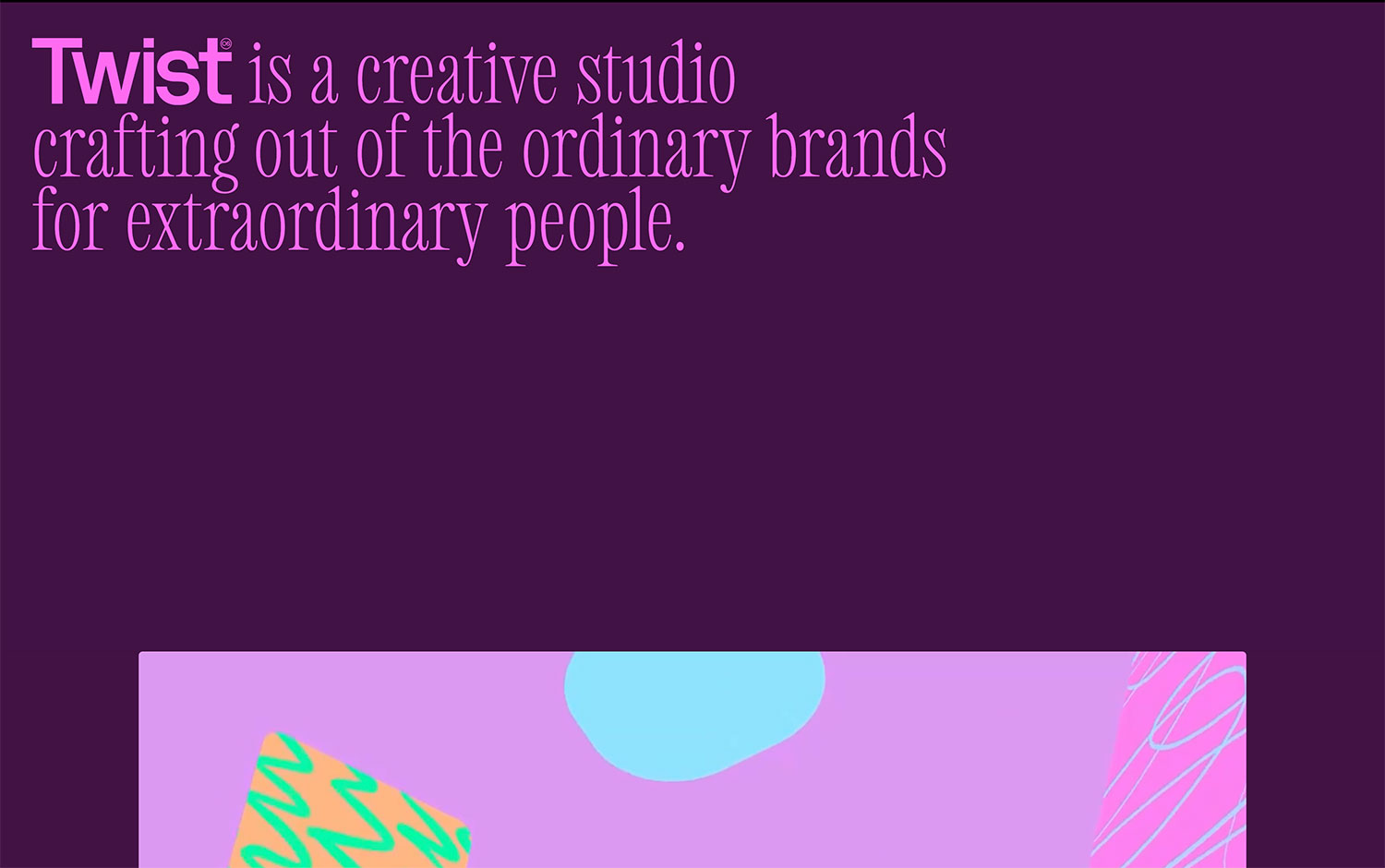
Design by Twist
Spain , BarcelonaDecember 10, 2025
Mindsparkle Mag


Design by Twist stand out by doing things differently — building brands that are “anything but ordinary” for the kind of clients who don’t fit the usual mold. With roots in Barcelona and collaborations across the world, the studio is led by Floriane Jambu and Alex Dalmau, who pair clarity with craft, minimalism with conviction, and collaboration with a refreshing lack of ego. We sat down to talk about the studio’s journey, what defines their “twist,” and what it really takes to build brands that break through today.
✜ Before we dive in — how are things on your side today?
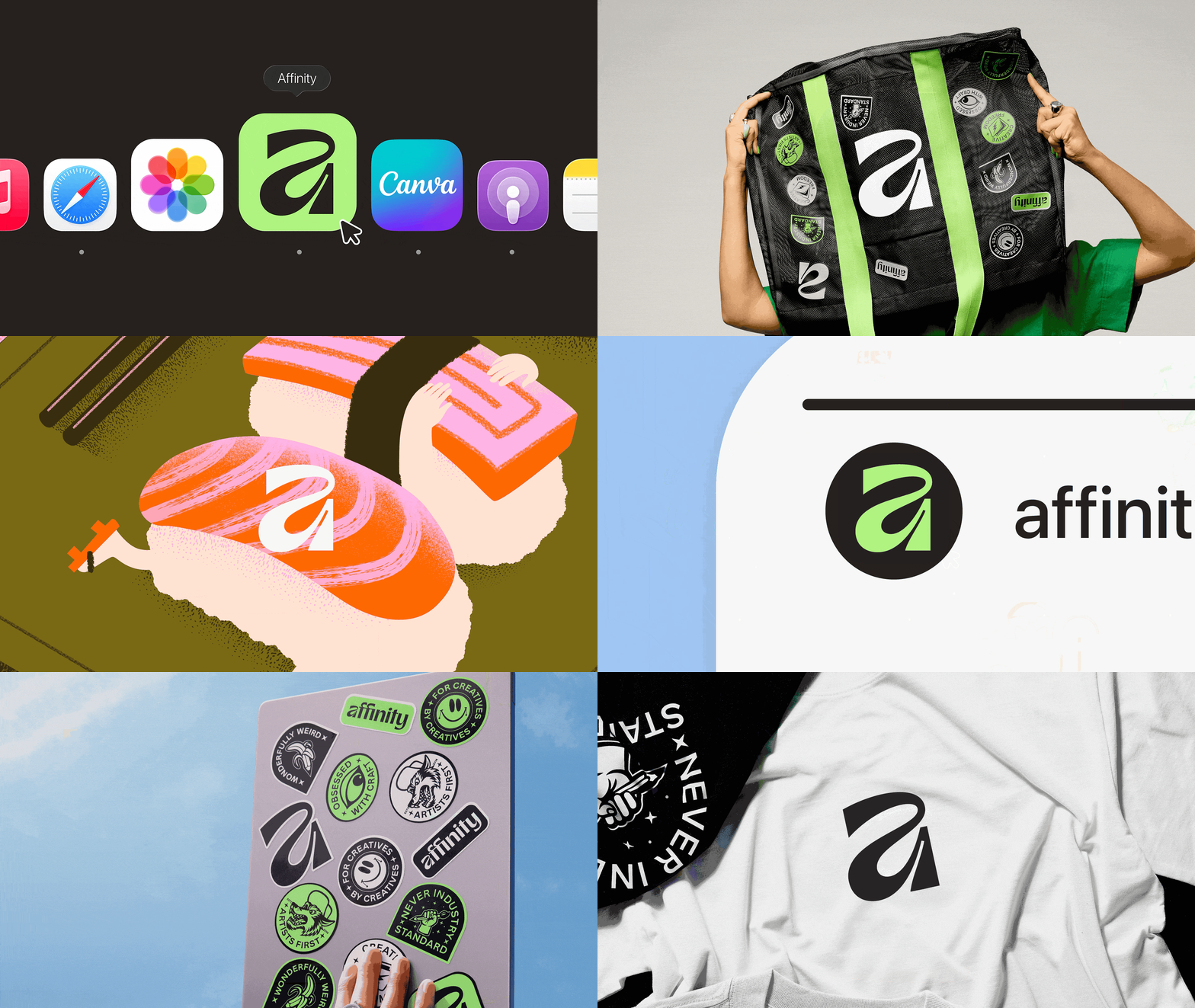
→ Good! A bit caffeinated, a bit chaotic, but in a nice way. We’re still riding the wave from the Affinity launch — an incredible amount of positive feedback, a few late nights, and that post-launch mix of excitement and “okay, back to reality.” Overall, we’re good, grateful, and in a pretty energised mood.
✜ Oh great… we’ll touch on that later. Let’s first rewind a little. When did Twist officially start, and what pushed you to create the studio in the first place?
→ Twist officially started in 2020, but the idea had been following us around for years. We’d both spent time in different studios, agencies, in-house teams… and while we learned a lot, we also saw what we wished the experience felt like. More direct, more human, more “let’s sit at the same table and figure this out together.” Eventually, it just felt obvious: the only way to work the way we believed in, was to build the environment ourselves. No grand business plan, just a clear intention: build brands that feel honest, intentional, and a little unconventional, with people who care about what they’re making.
✜ You’ve come a long way since then — including landing Canva as a client. How did that relationship start, and what did it mean for you as a studio?
→ Our relationship with Canva happened pretty naturally. We’ve always believed that if you’re nice to the people you work with — and you do good work — it comes back around. We’d worked with quite a few people from their Creative team in past roles, and when they started exploring a brand refresh last year, our name came up as a potential partner.
✜ There was no big pitch moment — just a few conversations, a bit of luck, and very good timing.
→ For a young, small studio like ours, being trusted by a team of that scale means a lot. It reassures other companies that size really doesn’t determine capability. It’s opened doors, but more importantly, it’s shown us that the way we like to work — closely, collaboratively, without the bloated structure — works even in very big environments.
✜ Fast-forward to today: how would you describe Twist’s core mission and why it still matters?
→ Twist exists to help people build brands that actually feel like them — not like a template, not like a trend, not like what everyone else in their category is doing. That matters more than ever. We’re surrounded by “good enough” design. Tools are better, AI is everywhere, and it’s incredibly easy for brands to look vaguely acceptable. But clarity, personality, and honesty? Those still take intention. That’s where we come in.
✜ Your website says you build brands “that are anything but ordinary.” What does “ordinary” look like to you — and how do you push beyond it?
→ For us, “ordinary” is when a brand blends into the category so smoothly that you forget it immediately. It’s not wrong — it’s just forgettable. Safe words, familiar colours, ideas that feel like they’ve been softened until they don’t say much of anything. We try to move past that by looking for what feels real and specific. The parts of a brand that might feel a little too honest or too sharp at first — that’s usually where the personality lives. Once we find that centre, we build around it and strip away the rest. When something makes you feel a tiny spark — interest, curiosity, even discomfort — that’s usually the sign we’re in the right place.
✜ You also emphasise “no fluff, no fuss, no ego” as part of your philosophy. How do you keep that mindset alive while delivering work that’s ambitious and wide-reaching?
→ That mindset comes quite naturally to us. We’ve always worked best in environments where things feel open and grounded, so we’ve built Twist to work that way by default. Keeping the team small helps — everyone involved is actually hands-on, which makes the whole process more honest. We show early thinking, we talk openly about what’s working and what isn’t, and we keep the process as straightforward as possible. Ambitious work doesn’t need theatrics; it just needs clarity, good communication, and people who genuinely want to make something great together. Keeping egos out of the room helps everyone focus on the actual problem, not the performance around it.
✜ Partnership sits at the centre of your practice — you describe yourselves as an extension of your client’s team. How do you build trust early on, and what does collaboration look like at Twist?
→ Trust usually builds pretty quickly when you’re straightforward. We’re open about what we know, what we’re still figuring out, and what we’ll need from the team. And we listen — really listen — especially at the start. Those early conversations often reveal more than any formal briefing document. Collaboration with us is hands-on and continuous. We share work as it evolves, not just when it’s polished. We keep communication simple and regular, and we make space for honest reactions. And above all, we work as equals — no egos, no ‘agency vs. client’ mentality. Clients often say it feels like we’re embedded in their team rather than sitting outside it. That’s exactly what we aim for.
✜ Your work often feels simple, but never simplistic. How do you decide what to keep — and what to leave out — when building a brand?
→ We edit. And then we edit again. Simplicity only happens when you’ve sifted through all the noise. We constantly ask: Does this express something real? Will the team actually use it? Does it make the brand feel more like itself? If the answer is “not really,” it goes. The most powerful ideas usually come from stripping things down until only the meaningful bits remain.
✜ Looking across your portfolio, what types of clients or challenges energise you the most?
→ We love working with people who are at a defining moment — launching, scaling, reinventing something, or about to make a bold move. But more than the context, it’s the mindset. Curious. Open. Brave enough to try something that doesn’t look like what their competitors are doing. Ready to roll up their sleeves with us. When clients want to build something with personality and honesty, we can do our best work.
✜ In a crowded brand landscape, what does it take today for a brand to truly break through the noise?
→ Clarity. Realness. And a point of view. You don’t need to be loud — you need to be unmistakably you. People can feel when a brand understands what it stands for and isn’t afraid to express it plainly. Consistency helps too, but not the rigid kind. The kind where every touchpoint feels like it’s coming from the same brain and the same heart.
✜ On the flip side, what are the biggest misconceptions you see from clients when they approach branding?
→ A big one is thinking branding is mostly the “big” stuff — the logo, the website, the hero video. Those matter, but your customer probably interacts with your brand more through small things: emails, onboarding, support, presentation decks. Another misconception is that “bold” automatically means risky. Often, the real risk is blending in.
✜ Your practice spans identity, naming, strategy, activation. How do you maintain cohesion across such different outputs?
→ For us, everything starts from one core idea: the truth we uncover at the beginning. If that’s solid, everything else — naming, identity, tone, activation — is just different ways of expressing the same thing. We’re also very hands-on from start to finish. We stay close, we collaborate with partners directly, and we make sure nothing gets watered down as it scales.
✜ And with tools and AI evolving quickly, what has changed (or not changed) in how you work?
→ A lot has changed around us — and that’s great. We love new tools. Affinity has been an exciting world to dive into, and AI helps us explore ideas faster. But the core hasn’t changed at all. Branding is still about human truth, human judgment, and human connection. Tools can help us get there more efficiently, but they can’t replace the conversations that shape the work.
✜ Finally — is there a project that still makes you smile when you think back to it? What made it special?
→ Affinity, for sure. Not just because of the scale, but because of the people involved. It really felt like a shared creative journey — no egos, no turf, just a lot of talented people working towards the same vision. There were so many moments where someone would bring an idea to the table and we’d all look at each other like, “Yes. That’s it.” That feeling is rare, and we don’t take it for granted.
Design by Twist operate with a calm confidence — no theatrics, no unnecessary noise, just thoughtful branding built on clarity, collaboration and a sharp instinct for what actually matters. Their work proves that simplicity isn’t the absence of ideas, but the result of discipline and care. In an industry full of distractions and visual clutter, Twist continue to carve out their own lane: focused, intentional, and always anchored in partnership. Perhaps that’s their real “twist” — the ability to make the extraordinary feel effortless.





.webp)